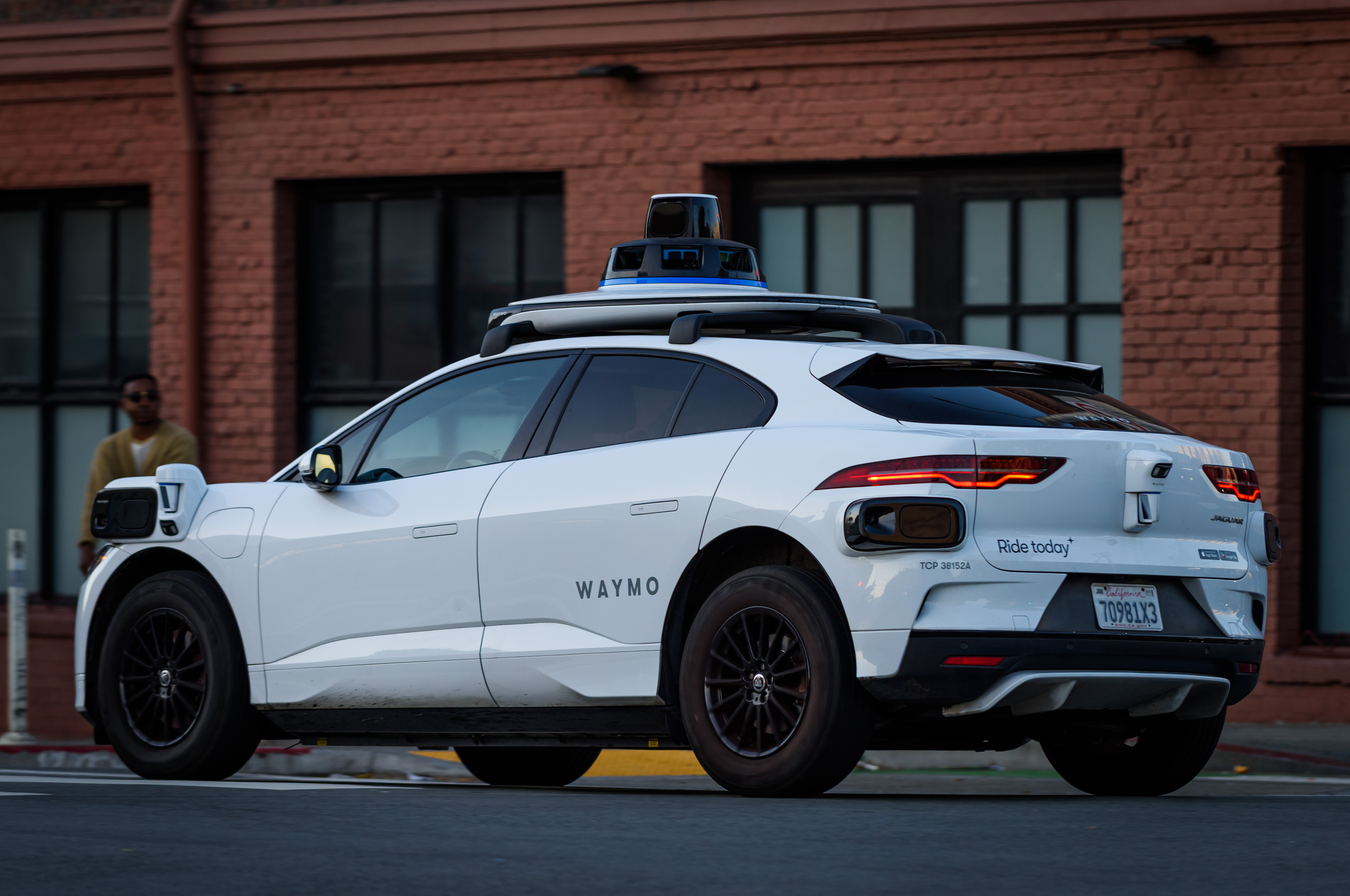
San Mateo County residents can, as of Aug. 14, legally hail a driverless Waymo robotaxi, at least on paper.
The California Public Utilities Commission approved the company's expansion into 18 counties on Friday, Aug. 14, clearing the last major regulatory hurdle for paid, fully autonomous rides on Peninsula streets.
But don't expect to summon one yet.
Waymo has not announced when service will actually begin in San Mateo County, and spokesperson Sandy Karp told the Los Angeles Times that the company's immediate focus is preparing to launch rider-only service in San Diego later this summer and continuing to validate its technology in Sacramento.
The approval, which stems from an advice letter Waymo filed with the CPUC on Jan. 28, authorizes the company to collect fares for driverless rides on all road types, at all speed limits, day and night, in rain, fog and hail. The only exception: widespread snow or ice.
What it means locally
The CPUC decision fills a regulatory gap left after the California DMV approved Waymo's expanded deployment territory on Nov. 21, 2025. The DMV governs whether autonomous vehicles can operate on public roads without a human driver; the CPUC governs whether they can carry paying passengers. With both approvals in hand, Waymo now has full authority to roll out paid driverless service in San Mateo County whenever it chooses.
The catch: regulatory territory is not the same as service area. Waymo can limit its fleet to smaller zones and expand incrementally, and spokeswoman Julia Ilina told the Folsom Times the company has no updates on timing.
Scott Moura, an associate professor at the University of California Institute of Transportation Studies, told the Mercury News that the Bay Area expansion timeline is "not a time-based thing. It's a performance-based thing." He said service reaching the East Bay within months is possible and arriving within a year is "very likely," though he did not address a specific Peninsula timeline.
Peninsula concerns already in play
Rep. Kevin Mullin (D-Calif.), whose congressional district covers the San Mateo Peninsula, introduced the AV Emergency Response Coordination Act on July 28. The bill would require federal safety standards for autonomous vehicle operators and create a process allowing officials to geofence AVs during emergencies.
"We have seen disturbing, and frankly, an unacceptable number of incidents where autonomous vehicles inadvertently interfere with emergency responders," Mullin said at a San Francisco press conference announcing the legislation.
Rebecca Long, director of legislation and public affairs for the Metropolitan Transportation Commission, told the Mercury News the technology holds promise for seniors, people with disabilities and young riders needing first-mile and last-mile connections to transit. But she acknowledged cities are not designed to accommodate autonomous vehicles and that higher traffic volumes remain a concern.
Safety record and recent recall
Waymo's fleet has logged more than 220 million fully autonomous miles. Company data shows its vehicles are involved in an estimated 94% fewer collisions causing serious injuries compared with human drivers.
Still, the CPUC voted to expand Waymo's territory about two months after the company recalled nearly all of its California fleet, according to the Eastern Herald, over a software flaw that caused vehicles to enter freeway construction zones closed to traffic. No collisions resulted, and Waymo deployed a remote software fix.
No San Mateo city officials or county supervisors have publicly commented on the approval, and no city council agenda item addressing autonomous vehicles has been scheduled.
Mullin's bill remains pending in Congress. Waymo said it supports a federal framework for AV safety standards.