Warmer summers mean faster-breeding mosquitoes across San Mateo County, and two local experts are urging residents to act before the pests multiply further.
Angie Nakano, laboratory director at the San Mateo County Mosquito & Vector Control District, and Rachel Curtis-Robles, the district's communications director, published a joint advisory Tuesday, July 21, through the county's Sustainability Department. Their central warning: rising temperatures now allow some mosquito species to develop from egg to adult in as few as 7 days.
The county is home to about 20 mosquito species, according to Nakano and Curtis-Robles. Heat accelerates all of them, but the pair flagged two threats in particular.
Invasive species moving north
Aedes aegypti, a mosquito capable of transmitting dengue, Zika and chikungunya, has been spreading through California since at least 2011. The species has been detected in 27 California counties, including Santa Clara County in the Bay Area. Nakano and Curtis-Robles wrote that warming conditions lower the barriers that once kept these disease-carrying mosquitoes restricted to Southern California and the Central Valley.
The insects lay sticky eggs on planter pots, yard furniture and other movable objects. Those eggs can remain dormant for months or even years, hatching only when water arrives.
West Nile virus is circulating earlier than usual nationwide this year, though no cases have been reported in San Mateo County.
Salt marsh mosquitoes along the Bay
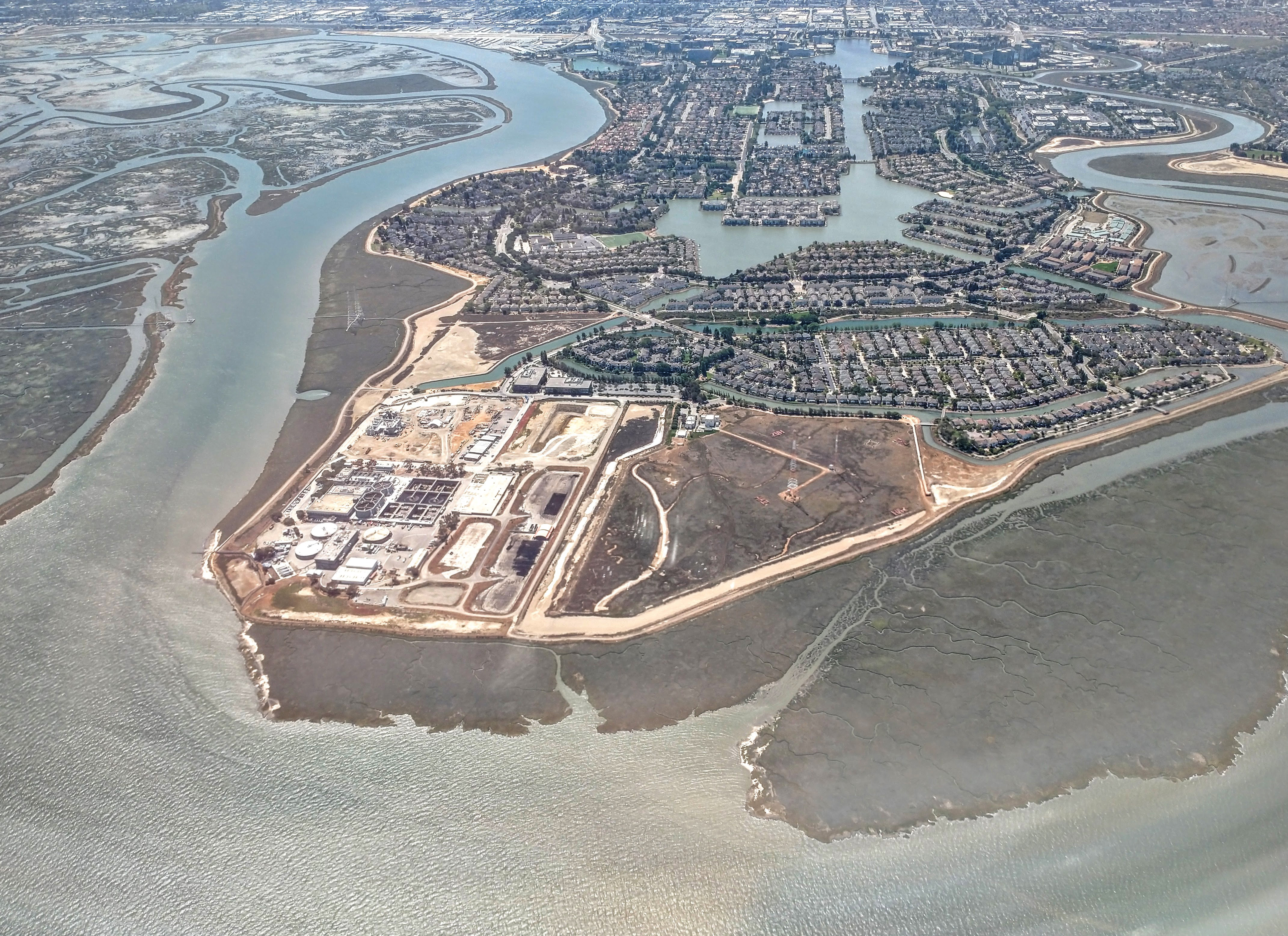
Along San Mateo County's eastern shoreline, salt marsh mosquitoes lay eggs on marsh plants in the San Francisco Bay. The adults rarely carry disease but are aggressive biters capable of flying 20 miles to reach people or animals. Rising sea levels may flood marsh habitat more frequently, giving these mosquitoes additional breeding windows, the advisory states.
Salt marsh mosquitoes were the original reason San Mateo County launched one of California's first mosquito control programs. The district operates with 22 staff members serving nearly 760,000 county residents, a figure Curtis-Robles shared with the M-A Chronicle in September 2025. She told the paper that if the district's work stopped, residents would notice within a month.
What residents can do
The district recommends these steps:
- Check your property weekly and dump any standing water onto plants or soil.
- Avoid overwatering potted plants sitting in saucers.
- Cover rain barrels with tight-fitting window screen.
- Add a sump pump if your crawlspace is prone to flooding. Homes on the Bay side of the county often sit on high water tables, and standing water in crawlspaces lasting a week or more becomes a breeding source.
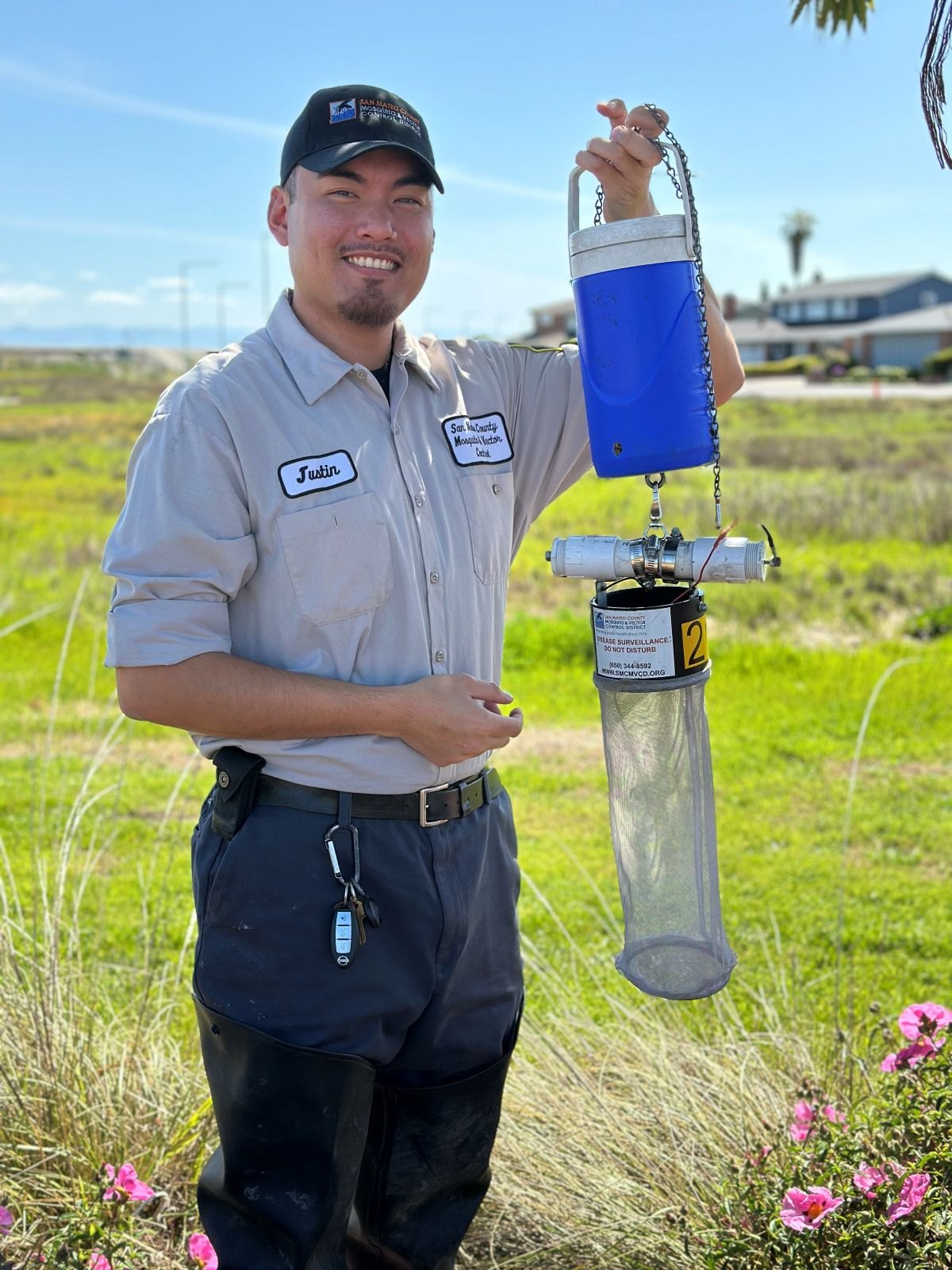
Residents who notice biting mosquitoes can report them at smcmvcd.org or by calling (650) 344-8592. District staff will visit, set traps and identify the species to pinpoint the water source and control larvae.