Nearly half of respondents to a survey of Second Harvest of Silicon Valley grocery-program participants have less than $100 in savings, according to a new survey described in a food bank release dated Oct. 16. Second Harvest serves Santa Clara and San Mateo counties.
The survey of 1,159 participants in Second Harvest’s Free Grocery program also found that 60% are more worried about paying their bills than they were a year ago. Nearly three-quarters said the cost of nutritious food makes it difficult for their household to stay healthy.
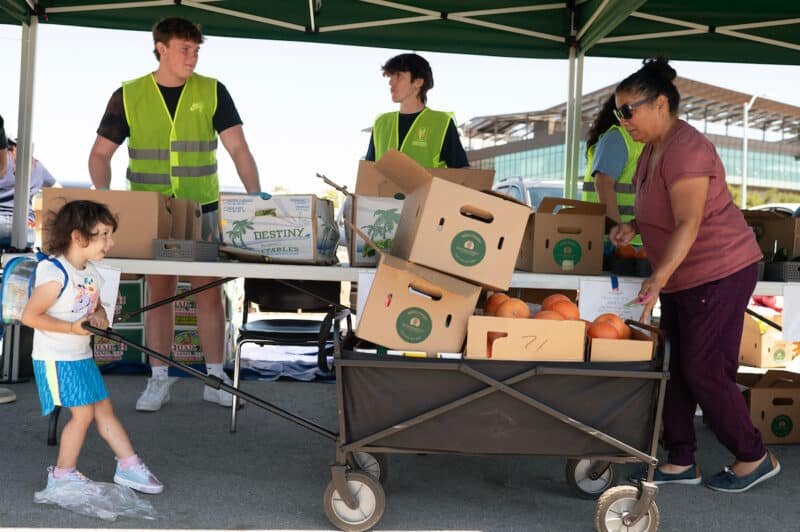
Second Harvest distributes food through nearly 400 partners at more than 900 sites across Santa Clara and San Mateo counties. The organization said it serves one in six residents each month.
Second Harvest CEO Leslie Bacho said families face difficult trade-offs between groceries, housing and medical needs as the holidays approach.
Seventy-four percent of respondents said someone in their household has pre-diabetes, diabetes, high blood pressure or a heart condition. For those families, food and medical care can compete for the same limited dollars. The 74% figure reflects a separate survey question from the food-cost finding.
One client, Jocelyn, was undergoing chemotherapy when she shared her story with the food bank. Her husband could not work for health reasons, and the couple’s retirement savings were gone.
“We never thought we would be in this position. We worked our whole lives,” she said.
Maria, a mother of four whose husband works in construction, told Second Harvest that money is tight. One of her daughters has a rare genetic condition requiring ongoing medical appointments, therapies and a specialized diet. Maria said the food from distributions helps relieve some of the costs.
Federal CalFresh changes add pressure
The survey results arrive as federal changes to CalFresh, California’s version of the Supplemental Nutrition Assistance Program (SNAP), threaten to cut benefits for more households.
Under the budget bill H.R. 1, expanded work requirements took effect in June 2026. Some recipients ages 18 through 64 must meet work or community-engagement requirements unless they qualify for an exemption or live in an area with a waiver, according to the California Department of Social Services.
Qualifying activities generally total 80 hours a month; workfare requirements can be lower. People subject to the rule who do not meet it generally face a three-month benefit limit within 36 months.
The age range for those requirements widened to 18 through 64, up from 18 through 54. Exemptions based specifically on veteran status, homelessness or former foster-youth status were eliminated, although people may qualify for other exemptions, according to a report citing California Assemblymember Alex Lee.
According to the report, statewide, roughly 47,000 people are projected to lose CalFresh each month starting in October 2026. Over the next year, an estimated 562,000 recipients could lose benefits.
Rachel Monaco, senior manager of policy and advocacy at Second Harvest, said in that same report that expanded work requirements risk cutting off food assistance for people already struggling.
The federal government is also shifting more SNAP administrative costs to California, raising the combined state and county share from 50% to 75% starting in October 2026.
The survey was conducted via text message in English, Spanish, Chinese and Vietnamese beginning Sept. 2, with the findings based on responses received as of Sept. 5.
How to get help
Residents in San Mateo County can find free grocery distribution sites and CalFresh enrollment support at shfb.org/get-food. Second Harvest’s multilingual Food Connection hotline is available at 1-800-984-3663, Monday through Friday, 8 a.m. to 5 p.m.