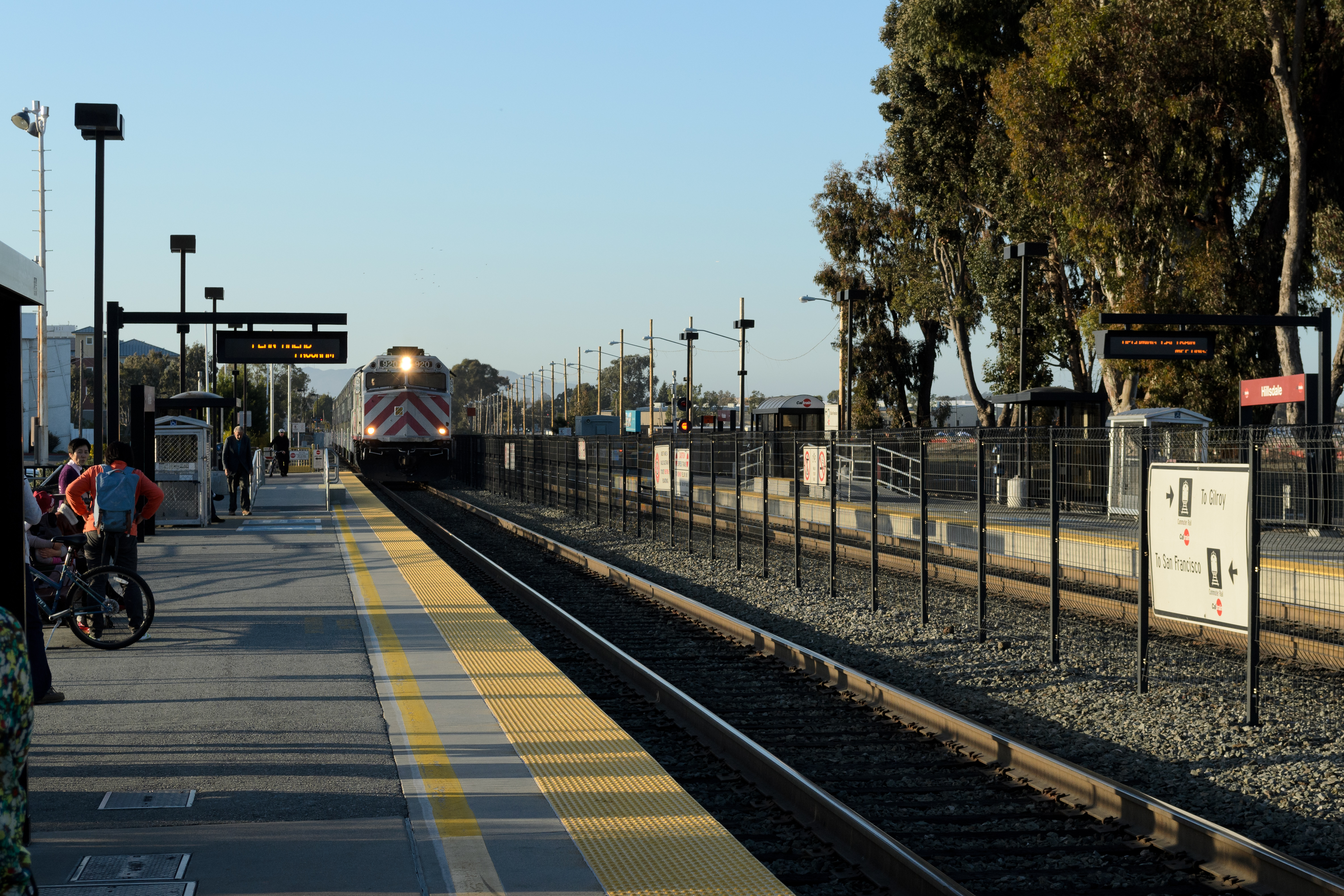
San Mateo published a guide on Monday, Aug. 31, explaining how a state law allows taller, denser housing near the city's three Caltrain stations.
The Community Development Department's FAQ document lays out how Senate Bill 79, the Abundant and Affordable Homes Near Transit Act, applies locally. The law, authored by State Sen. Scott Wiener and signed by Gov. Gavin Newsom on Oct. 10, 2025, took effect July 1.
SB 79 makes transit-oriented housing a permitted use on land zoned residential, mixed-use or commercial within a half-mile of qualifying rail stops. San Mateo County qualifies because it has more than 15 passenger rail stations, according to the city's resource page.
Where it applies
The law covers parcels near San Mateo's three Caltrain stations (Downtown, Hayward Park and Hillsdale) and portions of the Burlingame Caltrain Station area that extend into the city. All four are classified as Tier 1 transit-oriented development stops under state law.
What developers can build
Height and density limits depend on distance from a station's pedestrian entrance, according to the city's FAQ:
- Within 200 feet: Up to 95 feet, 160 dwelling units per acre, floor-area ratio (FAR) of 4.5.
- Within one-quarter mile: Up to 75 feet, 120 units per acre, FAR of 3.5.
- Between one-quarter mile and one-half mile: Up to 65 feet, 100 units per acre, FAR of 3.0.
To qualify, a project must include at least five housing units, provide a minimum density of 30 units per acre or the local minimum (whichever is greater) and cap average unit size at 1,750 net habitable square feet.
Affordability and labor requirements
Projects with 11 or more units must include on-site affordable housing. The city's FAQ lists three options: at least 7% of units for extremely low-income households, 10% for very low-income households, or 13% for lower-income households. The city's own inclusionary requirement applies if it is higher.
Buildings over 85 feet must meet prevailing wage and skilled-workforce labor standards.
SB 79 applies without local adoption
San Mateo is not incorporating SB 79 into its zoning code. The state standards apply directly and override any conflicting local rules for projects that use the law. Developers can also choose to skip SB 79 and build under existing city ordinances.
The city cannot opt out. Its FAQ notes that Measure T, approved by San Mateo voters in 2024, makes it infeasible for the city to adopt an alternative plan that would reallocate housing capacity without another voter approval.
The law does not apply to sites that require demolition of rent-controlled or price-controlled housing occupied within the previous seven years, according to the FAQ.
Most qualifying projects can use California Environmental Quality Act (CEQA) exemptions or streamlined review. Neighbors within 500 to 1,000 feet of a proposed project will be notified when an application is filed and before any decision or public hearing.
Regional context
The Metropolitan Transportation Commission has published a regional map of transit-oriented development zones covered by SB 79. In the Bay Area, the law applies in Alameda, San Francisco, San Mateo and Santa Clara counties.
Neighboring Redwood City's council voted unanimously in July to abide by the state standards, the RWC Pulse reported. "I think that our city has been very focused on transit-oriented development," Redwood City Councilmember Isabella Chu said at the July 13 meeting. "I think that we're already ahead of the wave, which is why it's not crashing over us."
Residents with questions can contact the San Mateo Planning Division at (650) 522-7212 or [email protected].