San Mateo County counted 2,240 people experiencing homelessness on Jan. 29, about 5% more than in 2024, with the entire numerical increase coming from people staying in shelters.
The county’s 2026 One Day Homeless Count found 1,095 people staying in shelters, up 110 from 985 in 2024. The unsheltered population remained unchanged at 1,145. The total rose from 2,130 people in 2024 to 2,240 this year, an increase of about 5.2%.
County officials said the increase in sheltered homelessness reflects expanded shelter capacity and stronger pathways to permanent housing. Since the previous Point-in-Time Count, 1,772 people have moved from homelessness into permanent housing through local services.
“The federally mandated Count provides an important point-in-time snapshot every two years,” Claire Cunningham, director of the county’s Human Services Agency, said in the county’s June 1 release. “It’s one of many data points we track on the movement of people into and out of homelessness.”
Cunningham said the county continues to focus on helping people leave homelessness while preventing others from becoming homeless.
What the count measures
Nearly 350 trained volunteers were expected to participate in the Jan. 29 count across San Mateo County, according to a county announcement issued the day before the count.
The federally required count provides a point-in-time snapshot of homelessness. The county said the count relies on visual observations during a single period and may not capture every person experiencing homelessness. For people staying in parked vehicles and RVs, the county uses an occupancy formula rather than a direct head count.
The county also conducts monthly direct counts to collect additional information between the biennial Point-in-Time Counts and help guide decisions about funding, programs and long-term homelessness strategies.
The county’s data show 1,253 people experiencing homelessness in 2017, 1,512 in 2019, 1,808 in 2022, 2,130 in 2024 and 2,240 in 2026.
The unsheltered population rose from 637 in 2017 to 1,145 in 2024 before remaining at 1,145 in this year’s count.
Housing costs remain a challenge
County officials identified high housing costs, income inequality and longstanding systemic barriers as major factors contributing to homelessness.
According to U.S. Department of Housing and Urban Development fair market rent data, the fiscal 2026 fair market rent for a two-bedroom unit in the San Francisco HUD Metro FMR Area, which includes San Mateo County, is $3,604 per month. The fiscal 2025 rate was $3,318, an increase of $286, or about 8.6%.
“While structural factors like high housing costs, income inequality, and longstanding systematic barriers are key drivers of homelessness, there is no single solution to the problem,” Amy Davidson, director of the Human Services Agency’s Center on Homelessness, said in the county’s results announcement.
Davidson said determining the appropriate support for each person requires understanding individual circumstances, strengths and needs.
Since 2013, San Mateo County has invested approximately $365 million in Measure K and other local funding to support the creation of more than 5,100 affordable permanent homes, according to the county.
The county also launched Right at Home this year, a grant-funded homelessness prevention program providing flexible financial assistance and case management to help residents remain housed, according to the county’s homelessness count release.
County expands shelter capacity
San Mateo County has expanded its shelter system in recent years.
Since 2020, shelter capacity countywide has increased by 41%, according to the county. Four new shelters have added a combined 449 beds with private accommodations and supportive services.
Additional investments added 45 beds at existing congregate shelters and 15 transitional housing beds paired with mental health services. The Navigation Center, one of the four new shelters, opened in 2023.
The county has also used a state-funded encampment resolution initiative to transition 170 people from 26 encampments into shelter or stable housing with supportive services. The county’s Homeless Outreach Team continues to connect people living outdoors with shelter, housing opportunities and other services.
Other California jurisdictions report declines
San Mateo County’s increase comes as several other Bay Area jurisdictions reported declines in their preliminary 2026 counts.
Alameda County reported a 13% decline from 2024, while San Francisco reported a 4% decrease, according to KQED and CalMatters. Contra Costa and Napa counties were among the Bay Area jurisdictions reporting increases.
More than half of the 28 California counties or continuums of care that had released 2026 data reported declines. Eight others did not conduct a Point-in-Time Count this year, while seven had not publicly released results, according to KQED and CalMatters.
California counted 181,934 people experiencing homelessness statewide in 2025, nearly 3% fewer than in 2024. HUD has not yet released an official statewide 2026 total.
Questions about point-in-time counts
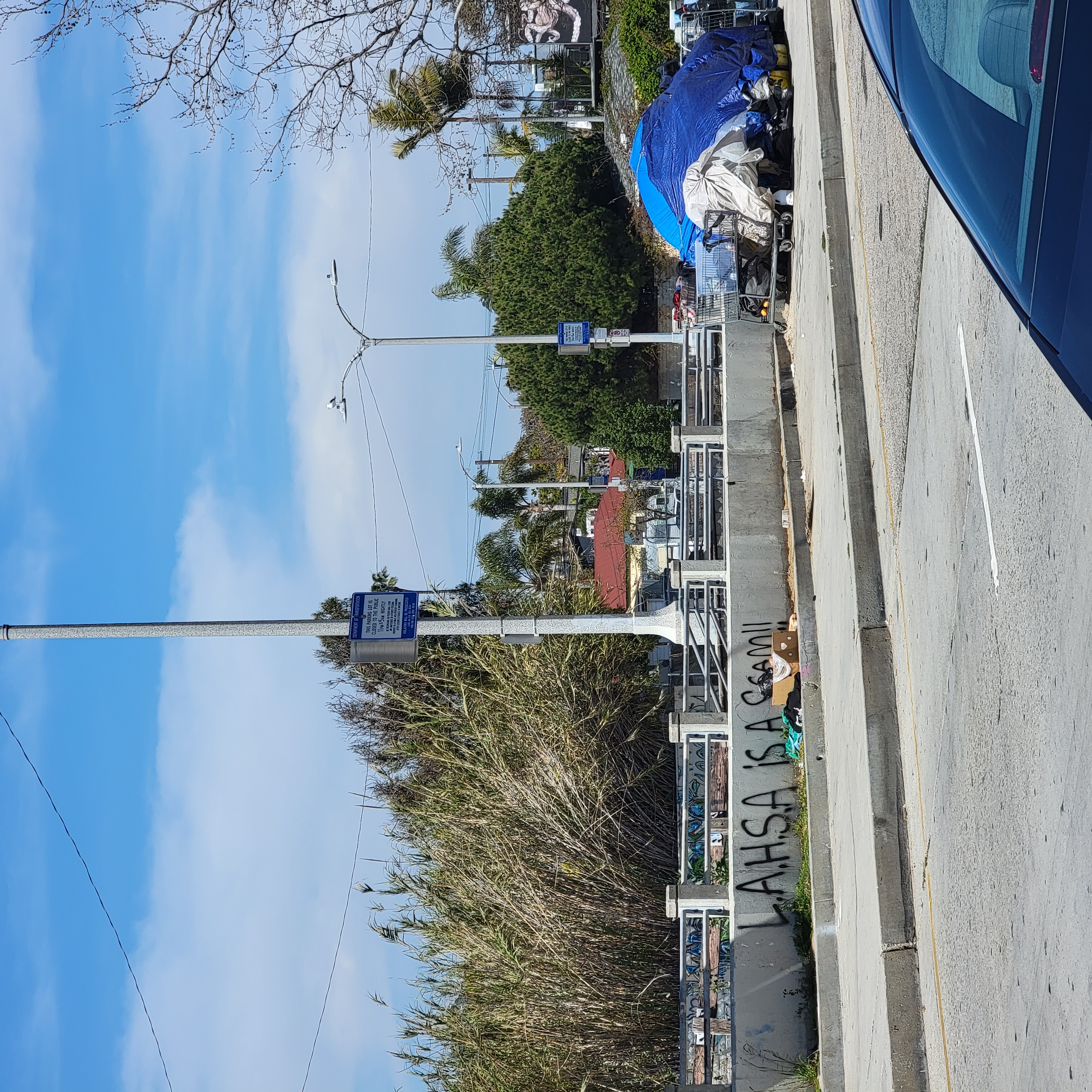
Some advocates have questioned whether increased enforcement of public camping restrictions could make point-in-time counts more difficult.
After a 2024 U.S. Supreme Court ruling gave cities more leeway to enforce restrictions on homeless encampments, cities increased camping enforcement and encampment clearings, KQED and CalMatters reported. Advocates said people who disperse from larger encampments can become harder to locate during counts.
“It’s a lot harder to find one person with a blanket somewhere than it is to see a camp,” Niki Jones, executive director of the Sacramento Regional Coalition to End Homelessness, told CalMatters.
A RAND study cited in the report found that overall unsheltered homelessness in the Skid Row, Hollywood and Venice areas of Los Angeles did not change between December 2024 and January 2026. The number of people living in tents fell 23%, while the number sleeping without a tent, tarp or other shelter increased 20%.
San Mateo County cautions that its One Day Count is a snapshot rather than a complete measure of homelessness. An executive summary of the preliminary findings is available, and the county expects to publish its full report this fall.