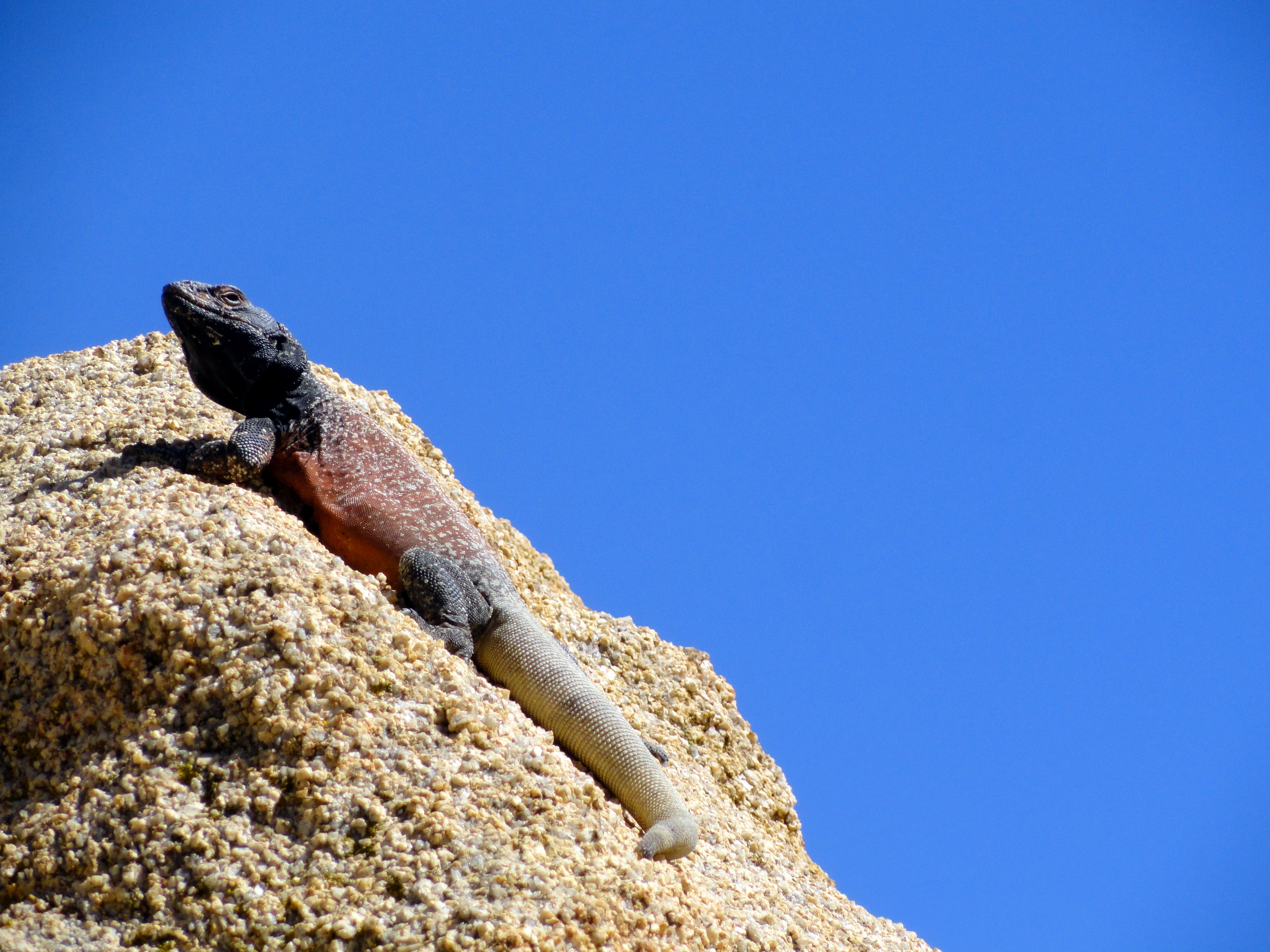
At CuriOdyssey in San Mateo, a chuckwalla named Buck does push-ups when his keeper opens the door.
That keeper is Michelle Gibes, an animal keeper at the Coyote Point science museum and zoo who trains reptiles to become public ambassadors. Her roster includes Buck, a bearded dragon, two desert tortoises (Mojave and Sonoran), and several snake species: California mountain king snake, rubber boa, ball python, gopher snake, and California king snake.
Not every reptile makes the cut. Gibes told the San Mateo Daily Journal that each animal is assessed before it can meet visitors. "If they don't tolerate a lot of tactile stimulus, are reactive to people or noise, or show anxious behavior, they may be better suited as an animal that lives in a habitat in public view," she said.
For those that pass, training starts small. First comes regular handling, then crating for transport, then extended handling periods, then time around guests, and finally gentle touches from visitors under a keeper's direction.
Every ambassador gets a choice. Before a tortoise goes out, keepers check whether it's burrowed or hidden and gauge its response to a gentle touch. For snakes, Gibes uses a snake hook to signal that handling, not feeding, is coming. The rubber boa rides in an open-top crate with substrate on the bottom so visitors can watch it burrow.
Buck's push-ups are more than a quirk. Gibes said the behavior decreases as the chuckwalla grows familiar with a keeper, which she interprets as a sign the animal recognizes individuals. She also said the facility's bearded dragon is more attentive to the one keeper who feeds him bugs during training sessions.
Gibes trained through the Exotic Animal Training and Management program (now called Animal Care and Training) at Moorpark College in Southern California, where students rotate weekly through areas including a "Reptile Room."
She spends part of her time busting myths. Visitors often assume reptiles are slimy because of shiny scales, cold to the touch because they're "cold-blooded," and devoid of personality. Meeting the ambassadors tends to change their minds, Gibes said.
Her conservation message is practical: pick up trash when hiking, drive slowly on warm days when reptiles are more active on roads, keep wild animals wild, and research rescues or reputable breeders before getting a pet reptile.
CuriOdyssey, a nonprofit founded in 1954, is home to nearly 100 rescued animals, most native to California, that cannot survive in the wild. It is open daily from 10 a.m. to 5 p.m. at 1651 Coyote Point Drive.
Upcoming CuriOdyssey events:
- First Friday Nights: Friday, August 7, 2026, 5 to 8 p.m.
- First Friday Nights: Friday, September 4, 2026, 5 to 8 p.m.
- Open Labor Day: Monday, September 7, 2026, 10 a.m. to 5 p.m.
- Sensory Sunday: Sunday, September 13, 2026, 2 to 5 p.m. (registration opens Friday, August 21, 2026)