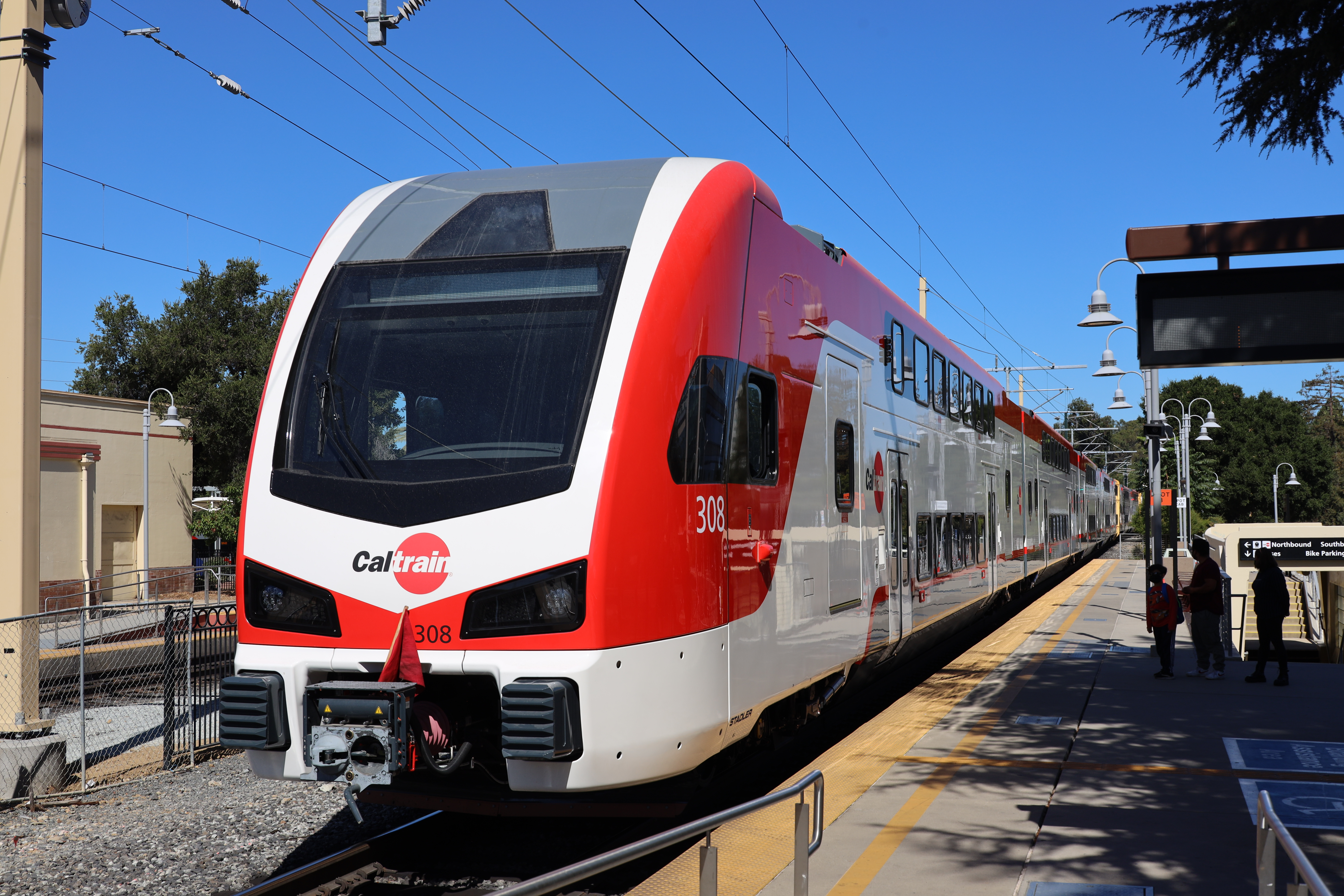
Five San Mateo railroad crossings are on a list for safety upgrades or potential closure under a corridor-wide strategy Caltrain's board adopted in June. The agency separately faces a $75 million annual deficit starting in fiscal year 2028 without new voter-approved funding.
The crossings at Villa Terrace, East Bellevue Avenue, 1st through 5th Avenues, 9th Avenue and Maple Street appear on the Corridor Crossing Sequence List, part of the Corridor Crossing Strategy the agency will present to its Local Policy Maker Group on Thursday, Aug. 27, at 5:30 p.m. via Zoom.
The strategy splits improvements into two tracks. A Safety Enhancement Program covers near-term fixes such as quad gates, fencing, lighting, intrusion detection and better pavement markings. An Elimination Program addresses longer-term closures and grade separations. Baseline upgrades including delineators, solar lane markers and refreshed signage apply to every at-grade crossing on the 50-mile corridor.
$20.5 million already committed
The San Mateo County Transportation Authority approved $20.52 million in June for the first phase of its At-Grade Crossings Enhancements Program, covering baseline improvements at all 28 at-grade Caltrain crossings in the county and advanced enhancements at 10 priority locations. Of that total, $2.32 million funds baseline work and $18.2 million pays for advanced upgrades like quad gates.
"Improving safety at rail crossings remains one of the most important transportation investments we can make for our communities," SMCTA Board Chair Julia Mates said when the board approved the funding in June.
Deficit threatens service
The crossing upgrades come against a stark fiscal backdrop. Fare revenue now covers only about 30% of Caltrain's operating budget, down from more than 70% before the pandemic. Ridership keeps climbing. July 2026 ridership hit 1.32 million trips, up 22.6% year-over-year, and average weekday boardings reached 47,459.
Without new money, Caltrain's board adopted a framework in June outlining potential cuts: hourly weekday service, no weekend trains, service ending by 9 p.m., no special-event runs and closure of up to one-third of all stations.
"We know that cutting the service is not something that we want to do because it also creates this downward spiral," Caltrain Chief of Staff Casey Fromson said at a July 23 Redwood City Council presentation.
November ballot measure
The agency's hopes rest on the Connect Bay Area Transit Initiative, a regional sales-tax measure authorized by Senate Bill 63 that will appear on the Nov. 3 ballot in San Mateo, Alameda, Contra Costa, San Francisco and Santa Clara counties. It would impose a 0.5% sales tax in San Mateo County for 14 years, generating roughly $1 billion annually regionwide. Two-thirds of the revenue would go toward preserving service on Caltrain, BART, AC Transit and other Bay Area operators.
The measure qualified after the District Elections Official certified sufficient signatures on July 1, and the Public Transit Revenue Measure District formally placed it on the ballot July 24.
The Corridor Crossing Sequence List will be updated annually and ratified by the Caltrain Board. The next LPMG meeting after Aug. 27 is scheduled for Oct. 22 at 5:30 p.m. The Caltrain Board of Directors meets Sept. 3 at 9 a.m.